By Christoffer Segerdahl, CCO & Co-founder, pickel
The Chicken-and-Egg Problem of Electric Trucks
Do you build charging infrastructure before the trucks arrive, or wait until there is demand? Electric truck sales are growing, but utilization tells a different story.

Do you build charging infrastructure before the trucks arrive, or wait until there is demand? This is the central dilemma facing every operator considering the electric truck segment.
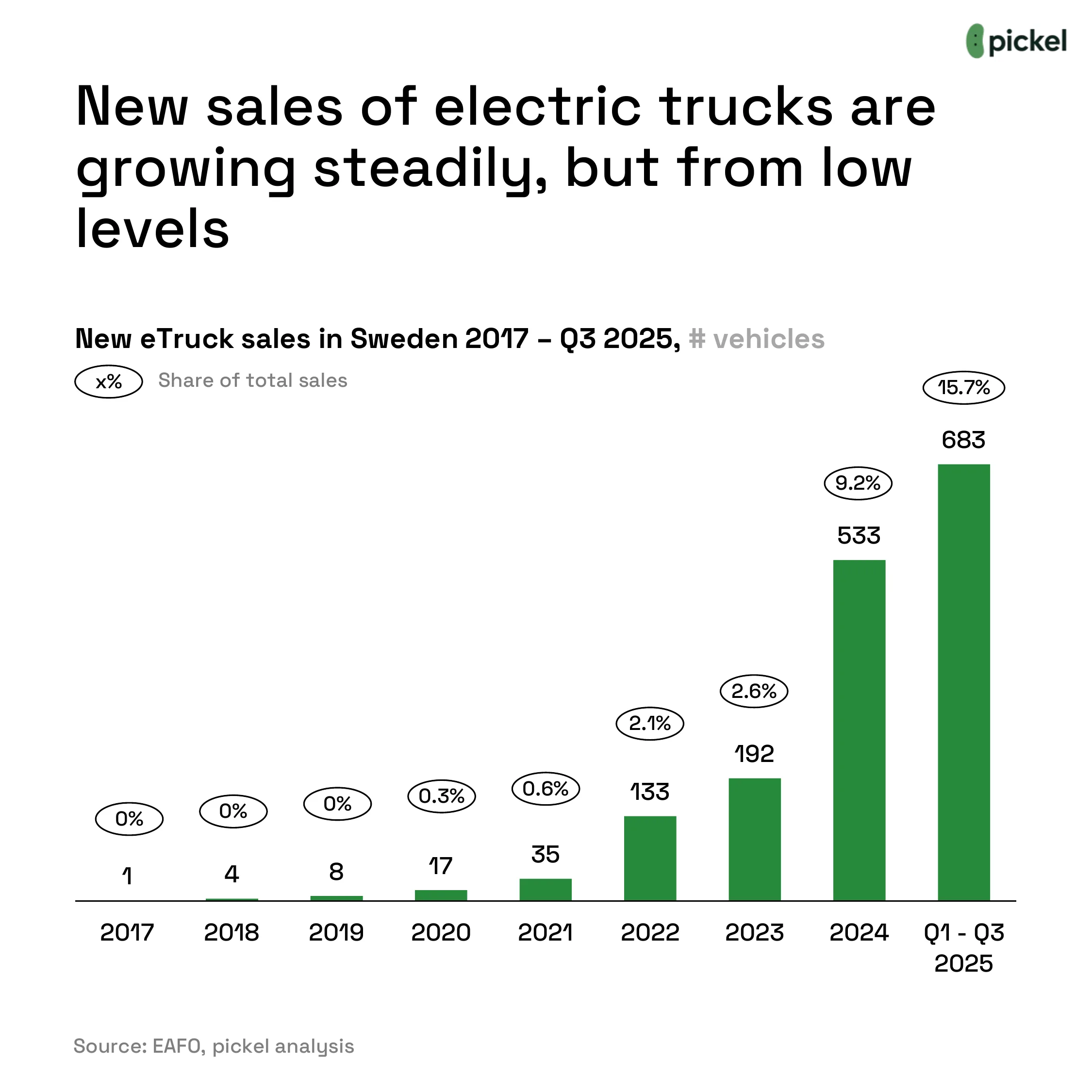
Electric truck sales are climbing from a low base
Electric truck sales are growing steadily in Sweden, but from low absolute levels. From just a single vehicle sold in 2017, the market reached 683 units in the first three quarters of 2025 alone, representing 15.7% of total truck sales. The trajectory is clear, even if the volumes remain modest.
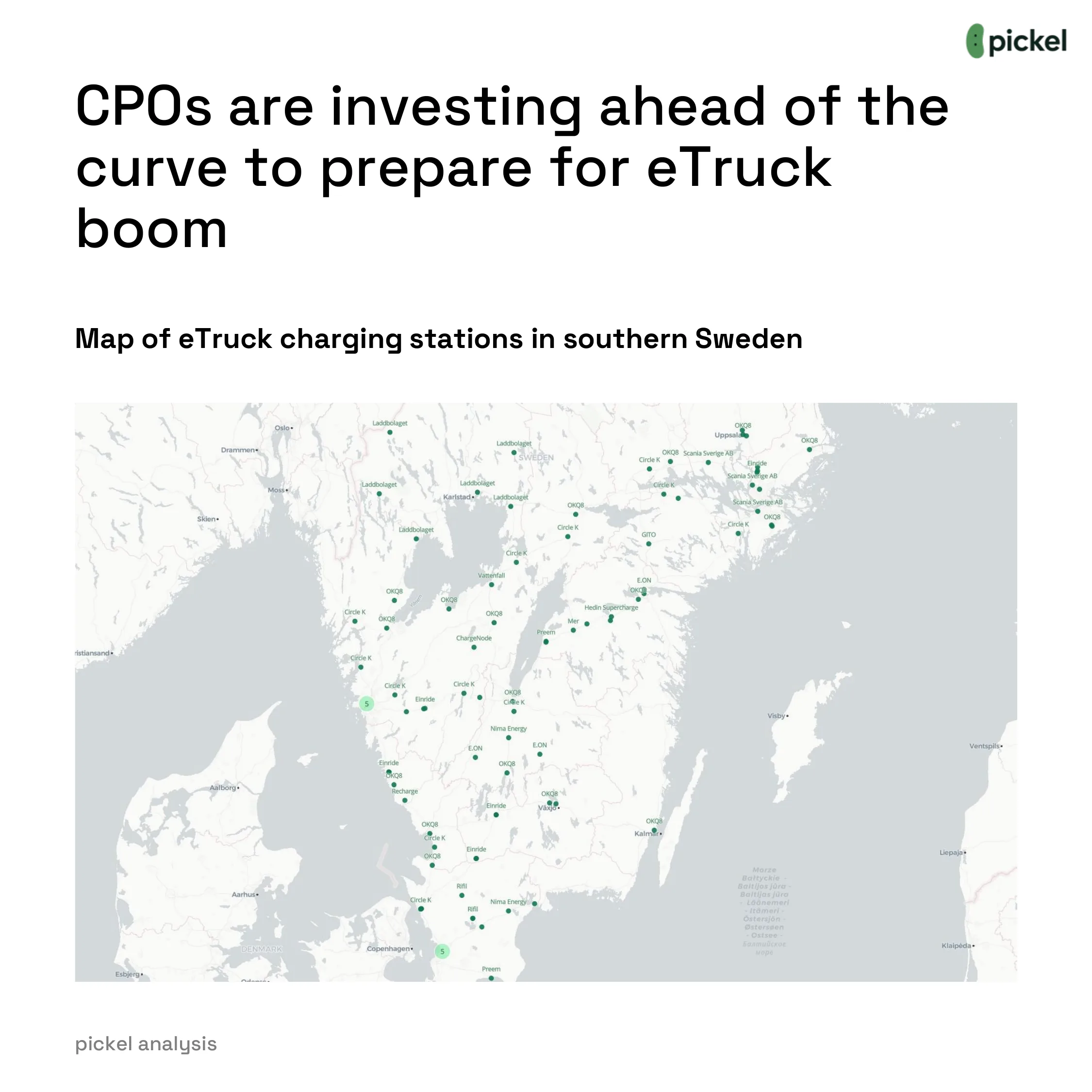
Infrastructure is running ahead of the fleet
Operators are responding by investing in public truck charging ahead of the curve. A growing network of truck-capable charging stations is appearing across southern Sweden, positioned along major freight corridors. But with only 2.4 electric trucks per charge point, compared to over 50 passenger vehicles per DC site, the infrastructure is running well ahead of the fleet.
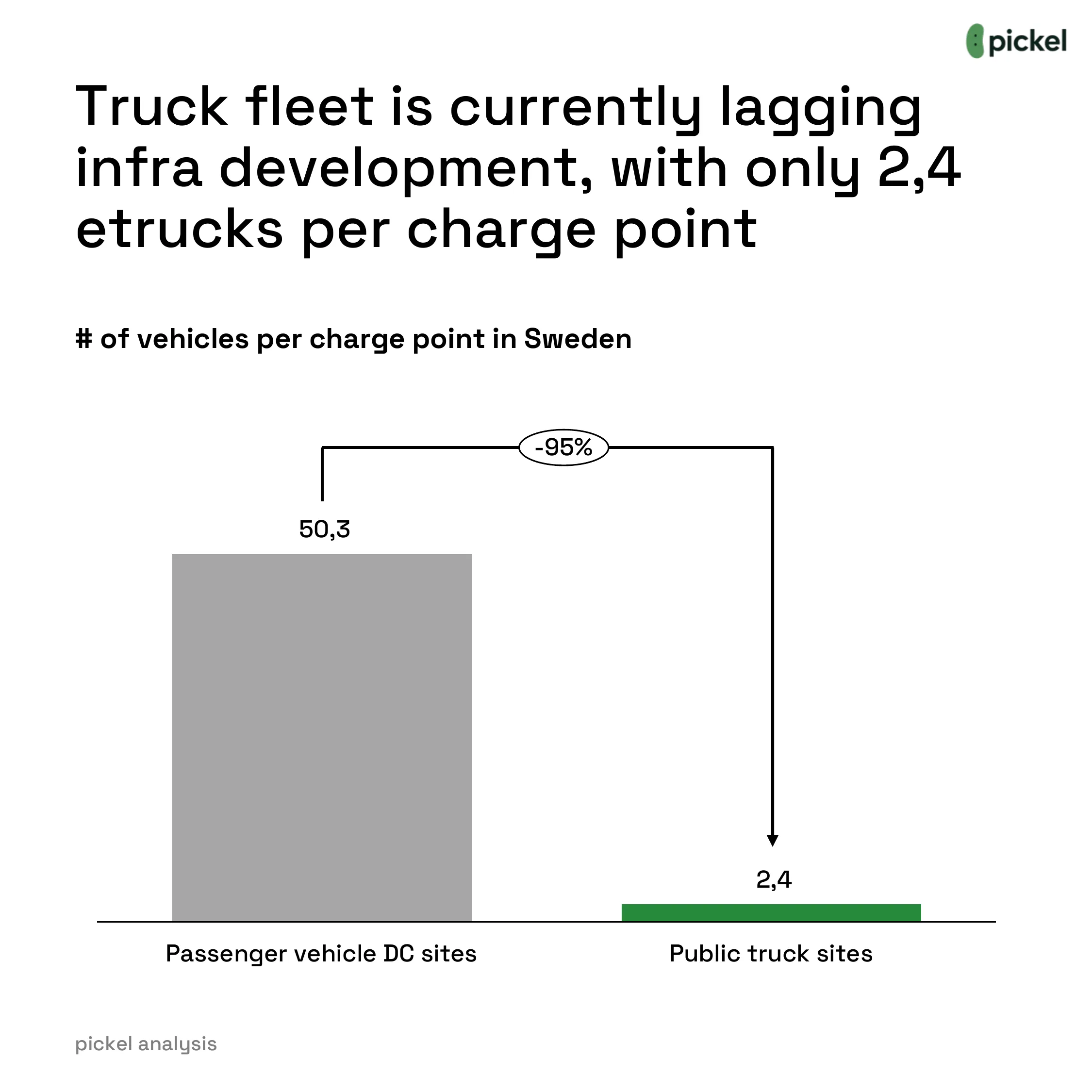
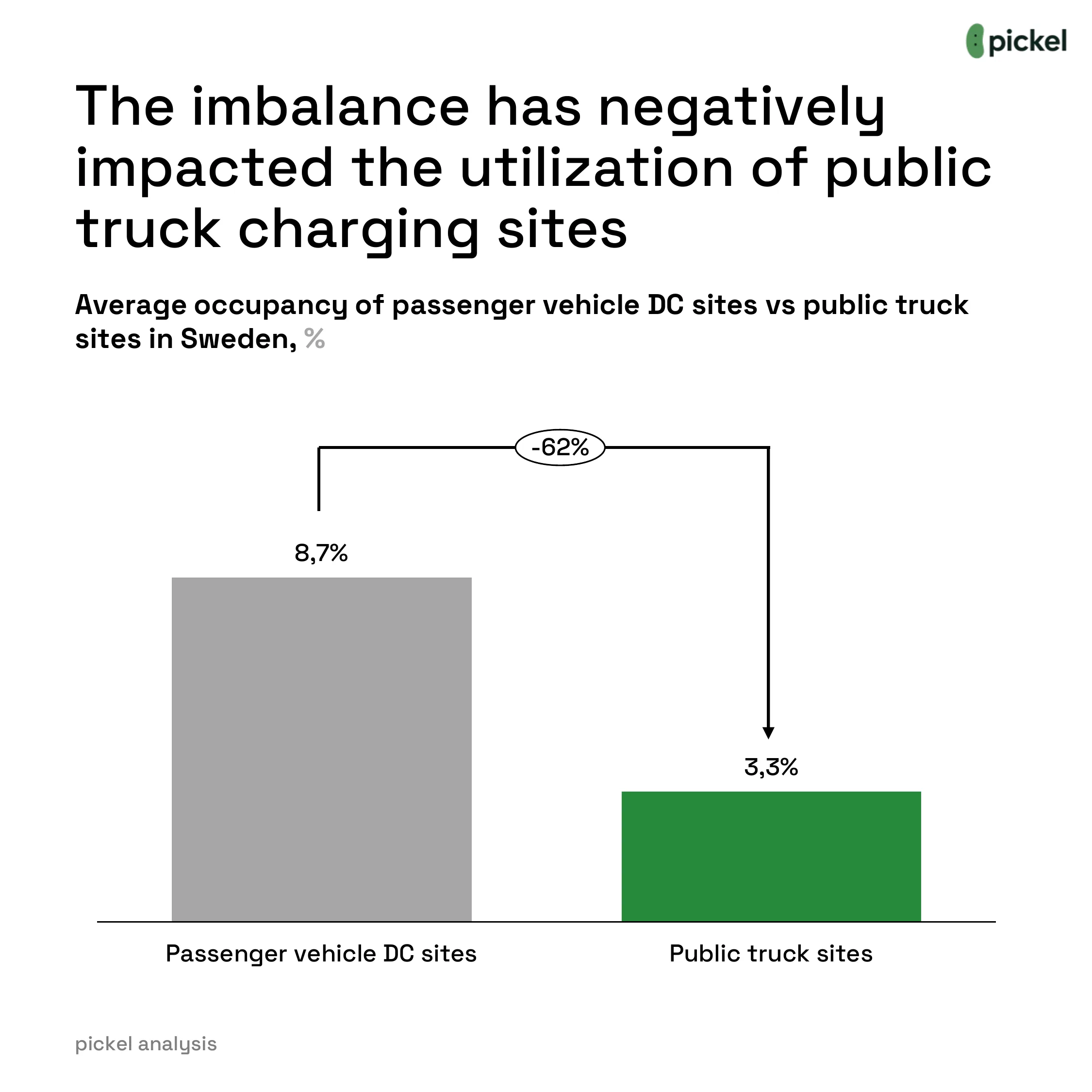
The result is predictable: truck charging sites currently show much lower utilization than passenger car fast charging, with average occupancy at 3.3% compared to 8.7% for passenger vehicle sites.
Timing and location will decide the winners
This makes timing and location absolutely critical. Build too late, and you risk blocking adoption by leaving fleet operators without reliable charging options. Build too early, and expensive assets sit idle, straining the business case. The operators who navigate this balance successfully will be the ones positioned to capture a rapidly growing market.
More insights