By Christoffer Segerdahl, CCO & Co-founder, pickel
Choosing the Right KPIs for EV Charging
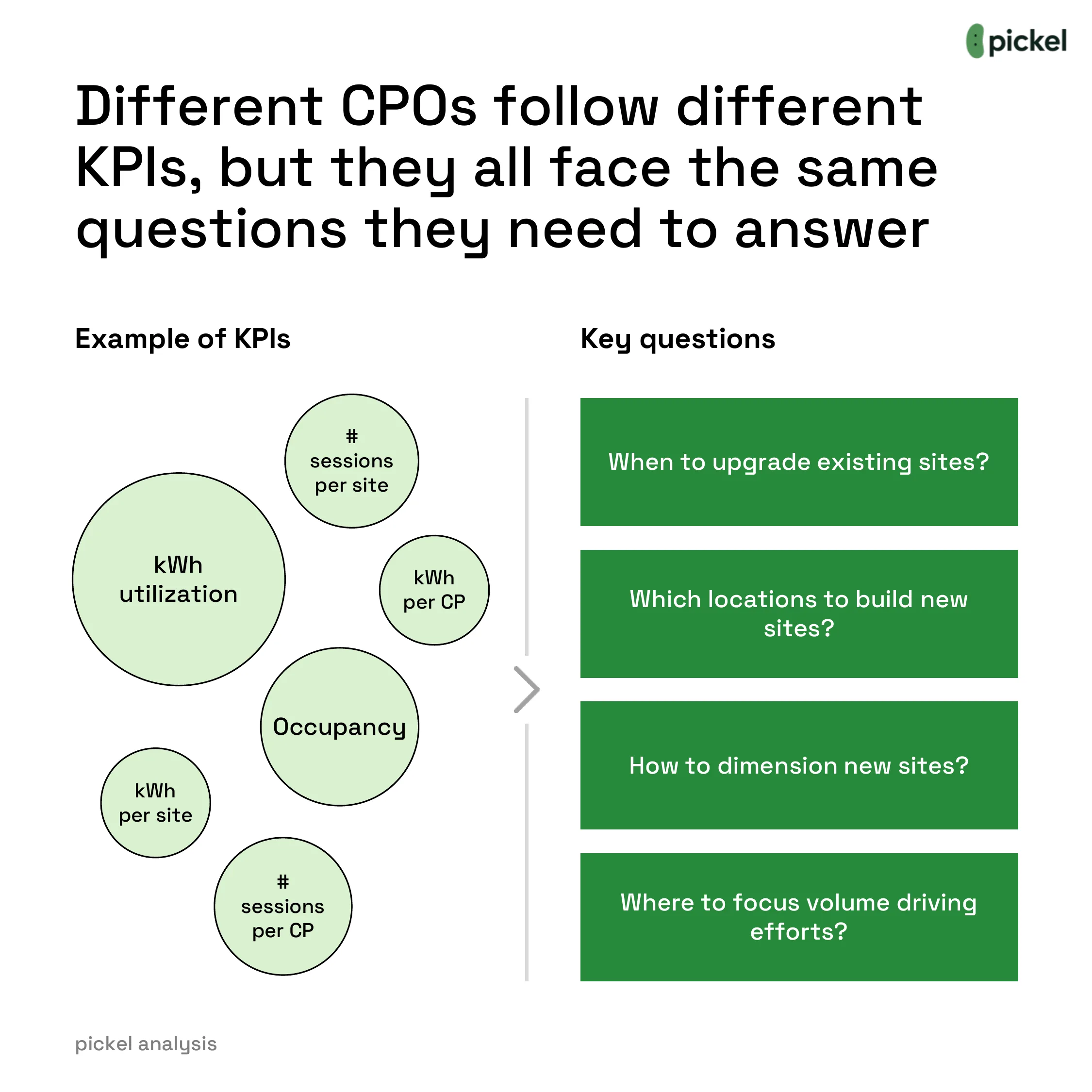
Most CPOs track performance using a few core metrics. But different KPIs often answer different questions, and can lead to very different conclusions about site performance.

Most charge point operators track performance using a few core metrics. But different KPIs often answer different questions, and relying on a single metric can lead to very different conclusions about how well a site is actually performing.
The trap of measuring sites on one metric
Consider a practical example: a smaller site may outperform a larger one when measured by occupancy and kWh per charger, while the larger site delivers significantly more total energy. So which site performs better? The answer depends entirely on what you are optimizing for.
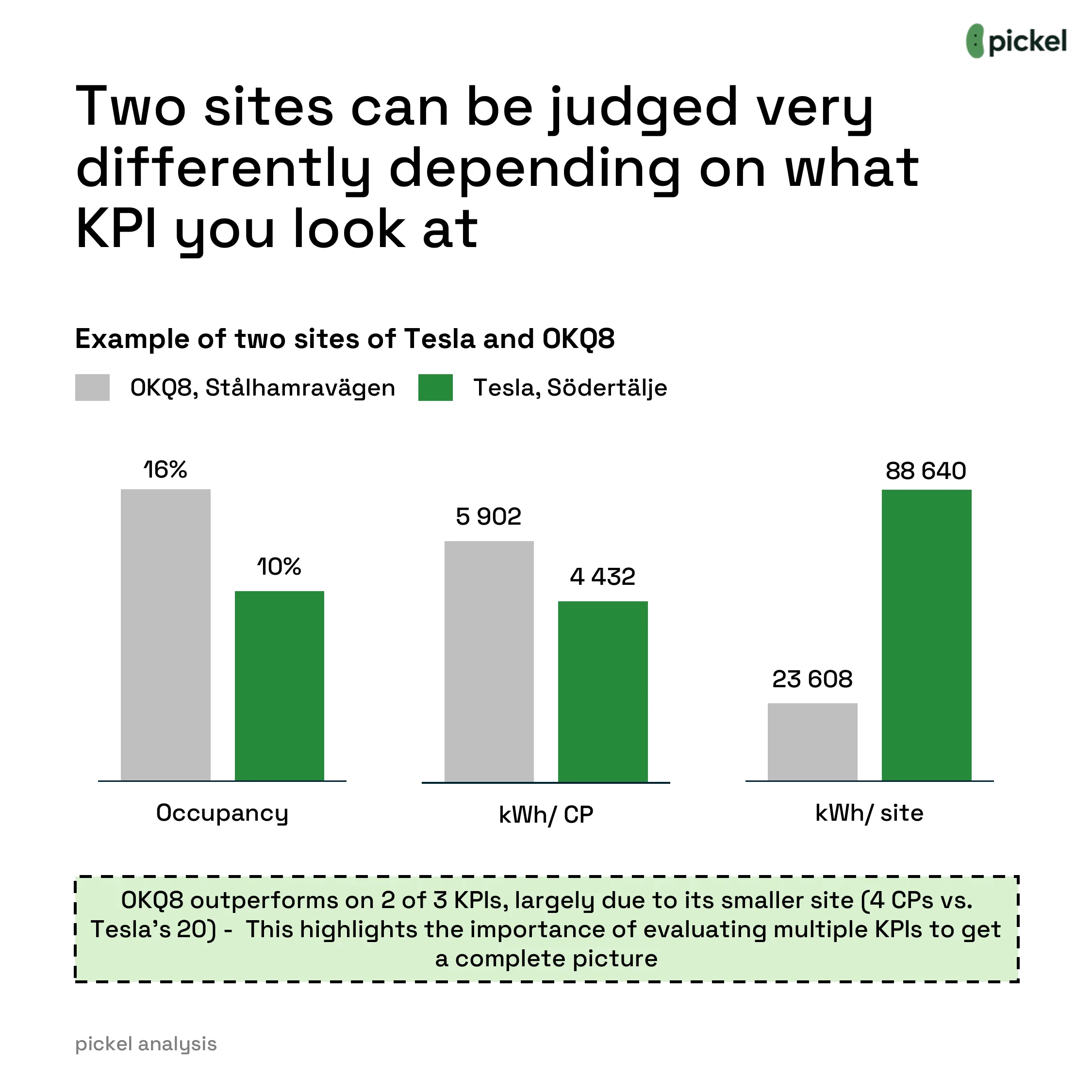
This tension is common across the industry. A four-charger site with high occupancy looks strong in per-unit metrics, but a twenty-charger site with moderate occupancy may be generating far more revenue in absolute terms. Without looking at both perspectives, operators risk drawing incomplete conclusions from their data.
A multi-metric view of charger performance
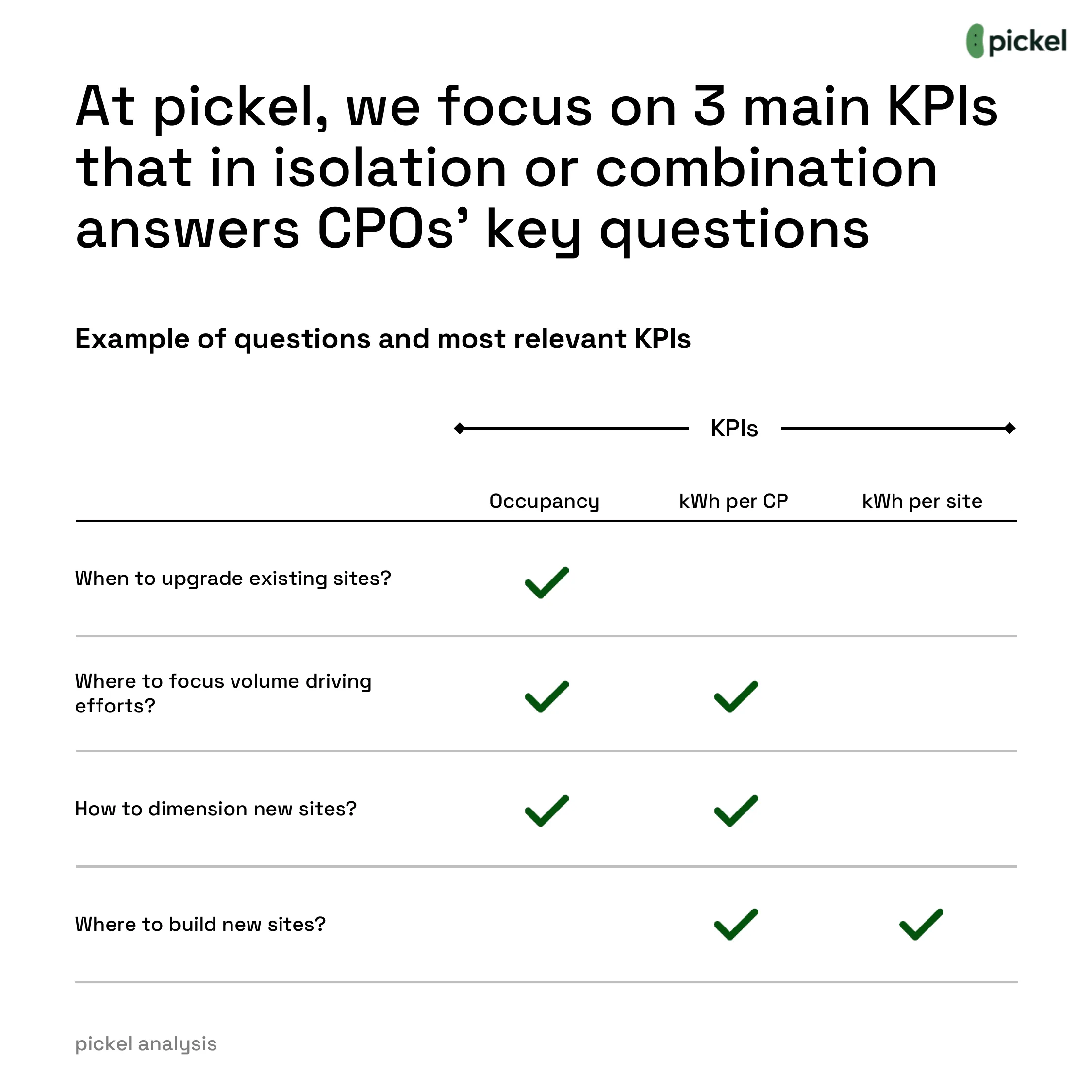
At pickel, we focus on a combination of KPIs to help operators answer the questions that matter most: where to build new charging sites, how to dimension new installations, when to upgrade existing sites, and where to focus volume-driving efforts. By combining occupancy data with kWh per charge point and kWh per site, operators gain a complete picture rather than an optimistic fragment.
Better decisions start with the right metrics, and the right metrics always depend on the question being asked.
More insights