By Christoffer Segerdahl, CCO & Co-founder, pickel
How Does Pricing Influence Site Performance?
Price differences in EV charging can be far larger than fluctuations at the gas pump. In one area of Malmo, prices range from 2.7 to 10 SEK/kWh, a spread of almost 300%.
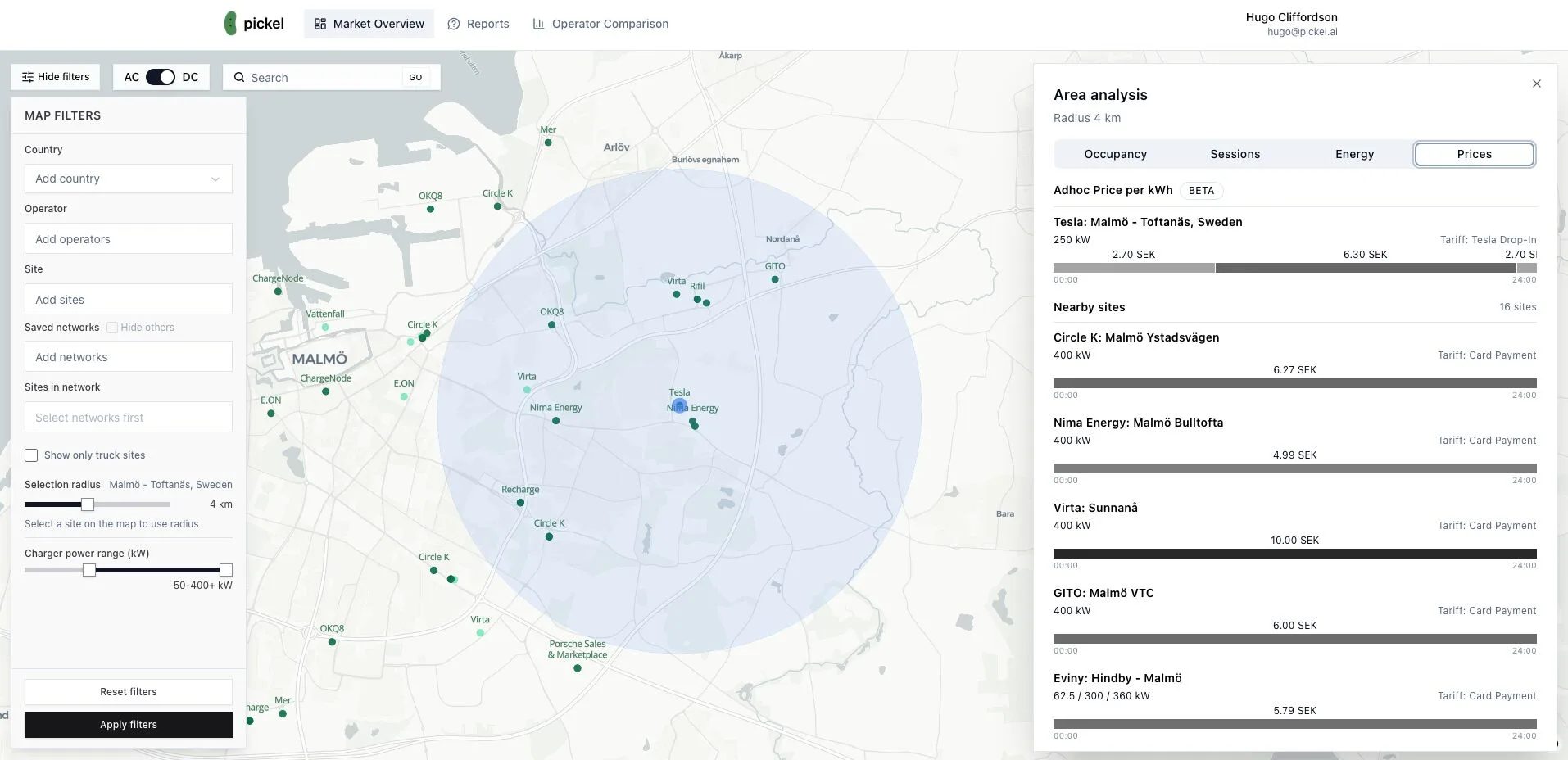
Recently, there has been extensive discussion about fluctuating gasoline prices. But when you look at EV charging, the price differences can be far more dramatic.
A 300 percent price spread inside one city
In one area of Malmo, prices range from 2.7 SEK/kWh to 10 SEK/kWh, a difference of almost 300%. This level of variation within a single geographic cluster means that pricing strategy is not just a revenue lever, it is a competitive weapon.
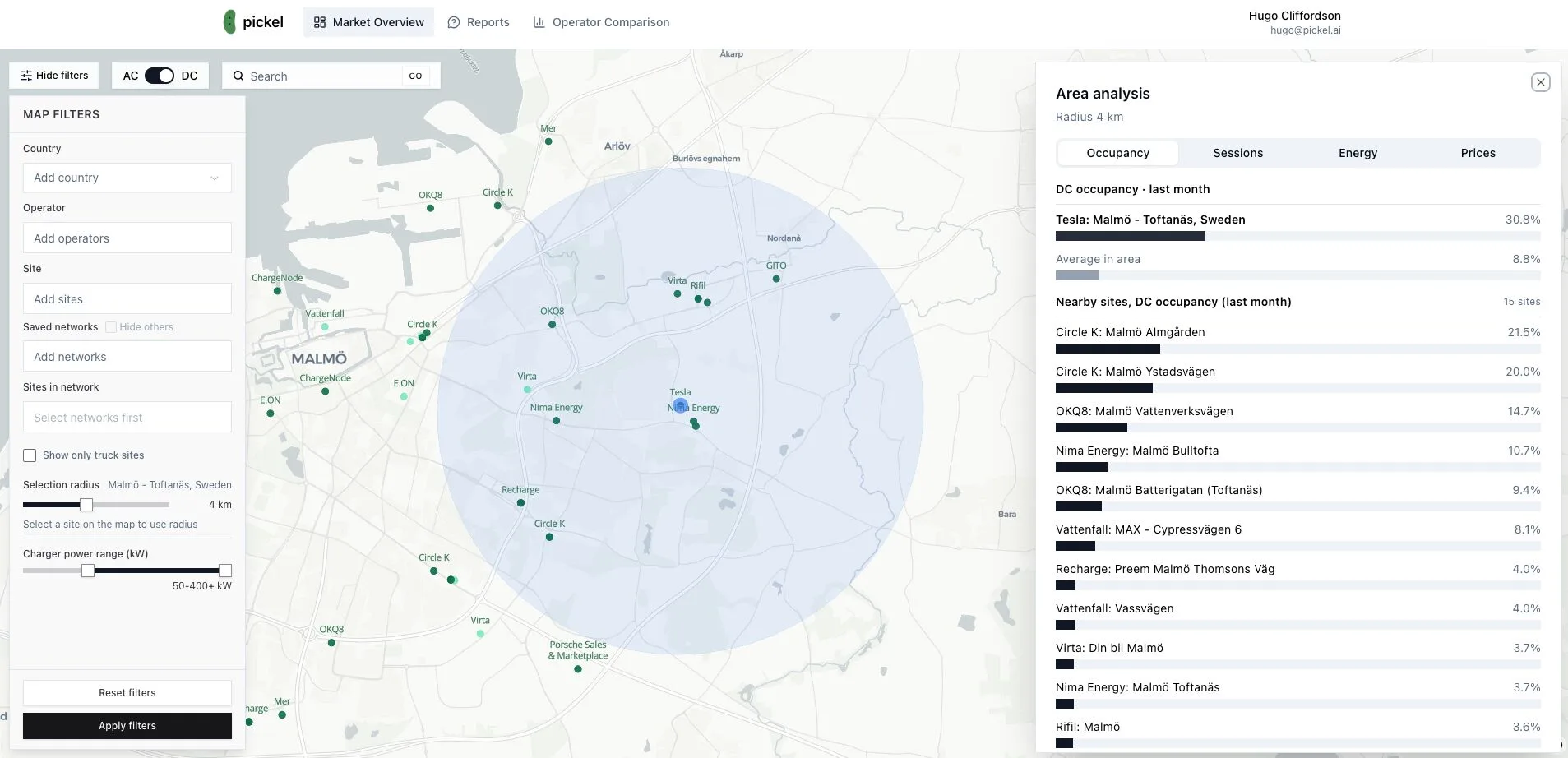
Dynamic pricing is already outperforming static
At the same time, Tesla, using dynamic pricing, is the highest-performing operator in the area with 31% occupancy in February. This is not a coincidence. Dynamic pricing allows operators to respond to real-time demand signals, adjusting rates to balance utilization across their network.
When pricing and performance are analyzed together at the site level, operators can start to understand how pricing differs across regions and competitors, how price levels directly impact utilization, and where pricing strategies create a genuine competitive advantage.
From static rates to data-driven pricing
At pickel, we combine pricing intelligence and charging performance data to help operators move from static pricing to data-driven pricing strategies. The operators who understand the relationship between price and performance at a granular level are the ones building sustainable businesses. Better insights lead to better pricing decisions.
More insights