By Christoffer Segerdahl, CCO & Co-founder, pickel
Location Drives Occupancy, Yet Decisions Rely on Incomplete Data
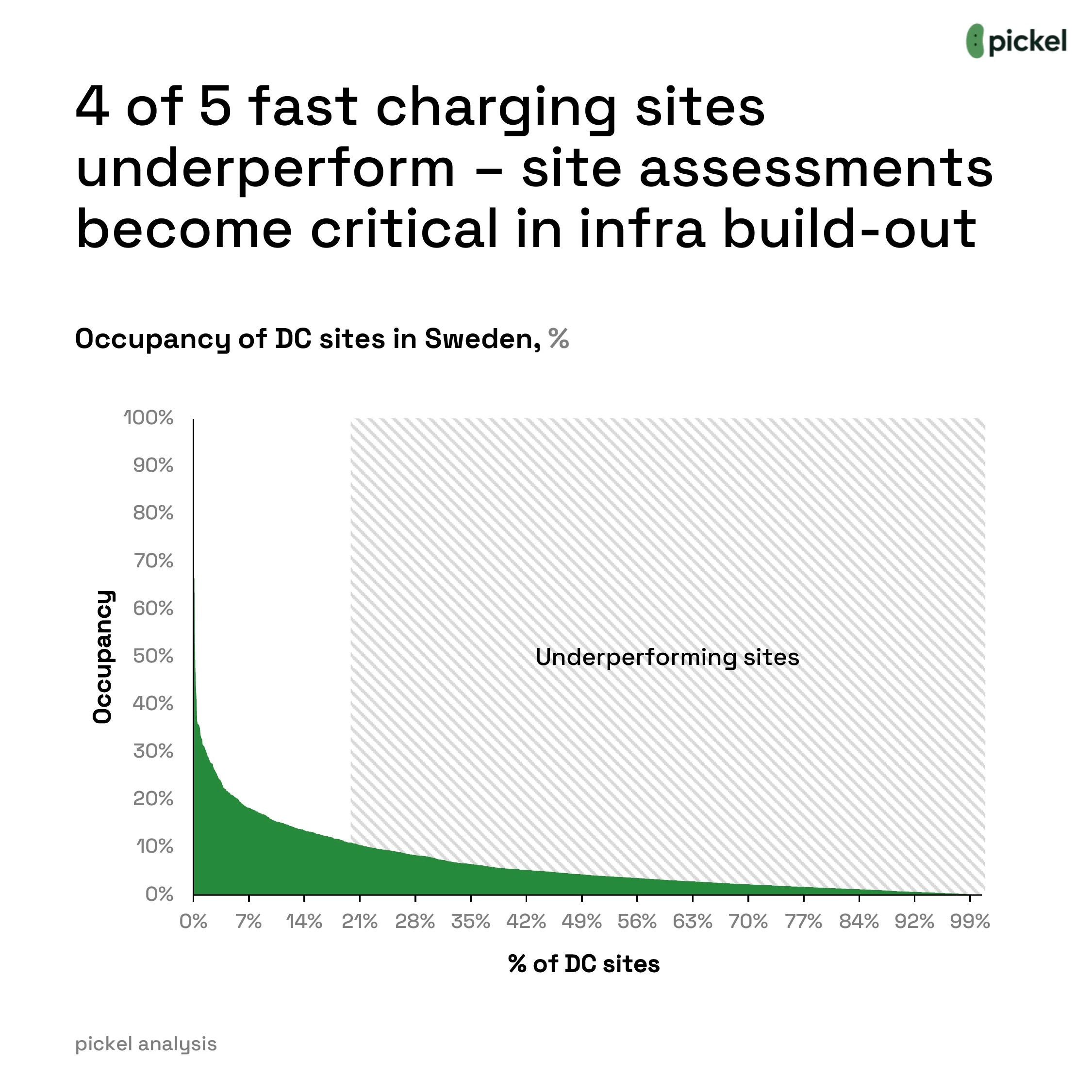
Our data shows that 4 out of 5 fast-charging sites underperform. The problem is not the hardware, it is the site assessment process behind every investment decision.
Our data shows that 4 out of 5 fast-charging sites underperform relative to profitability benchmarks. The problem is rarely the hardware itself. It is the site assessment process that precedes every investment decision.
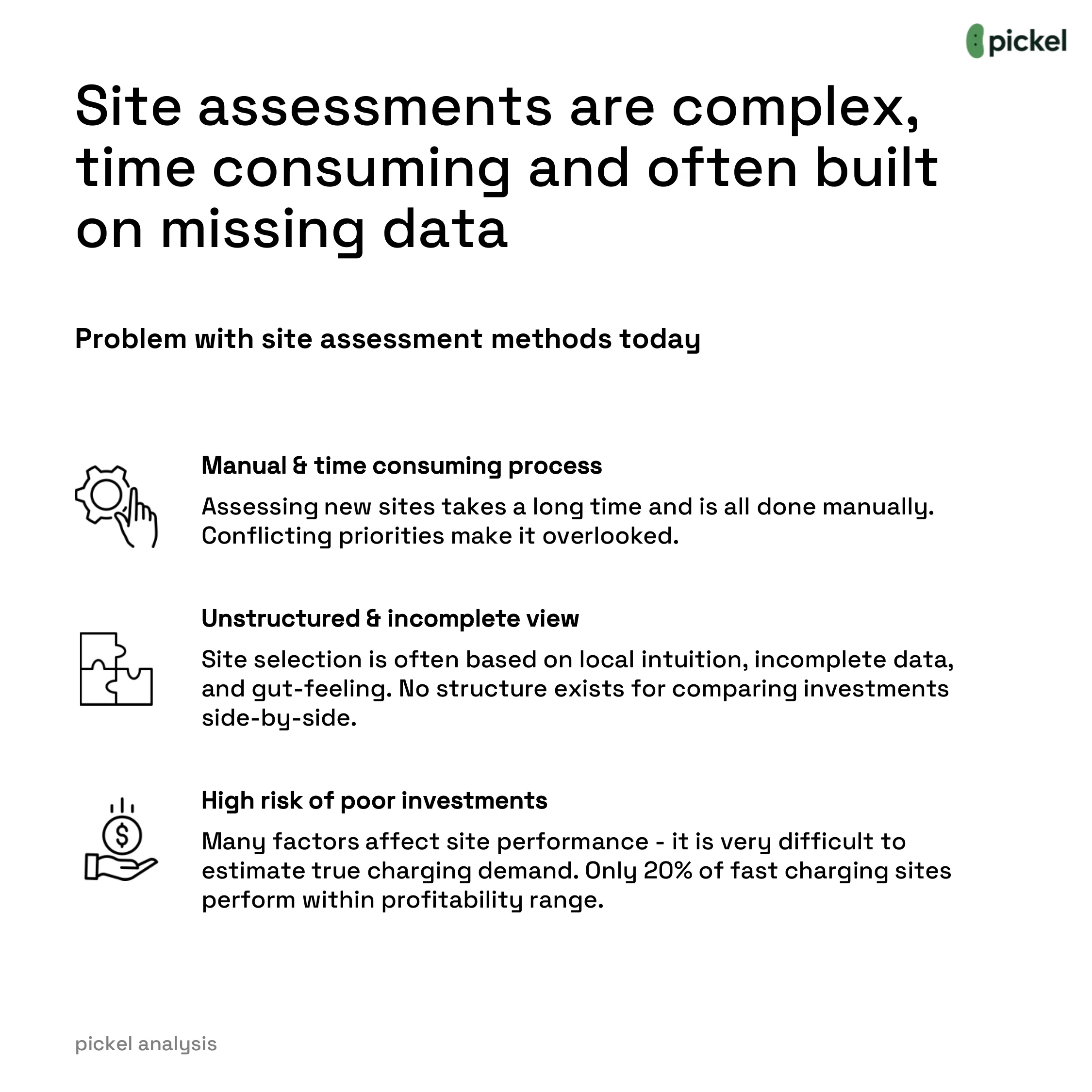
Site selection is still mostly manual
Today, site selection is often manual, unstructured, and based on incomplete data. Local intuition and gut feeling frequently drive decisions that involve significant capital expenditure. No standardized structure exists for comparing potential investments side by side, and conflicting priorities mean that rigorous assessment is often deprioritized.
Many factors drive real charging demand
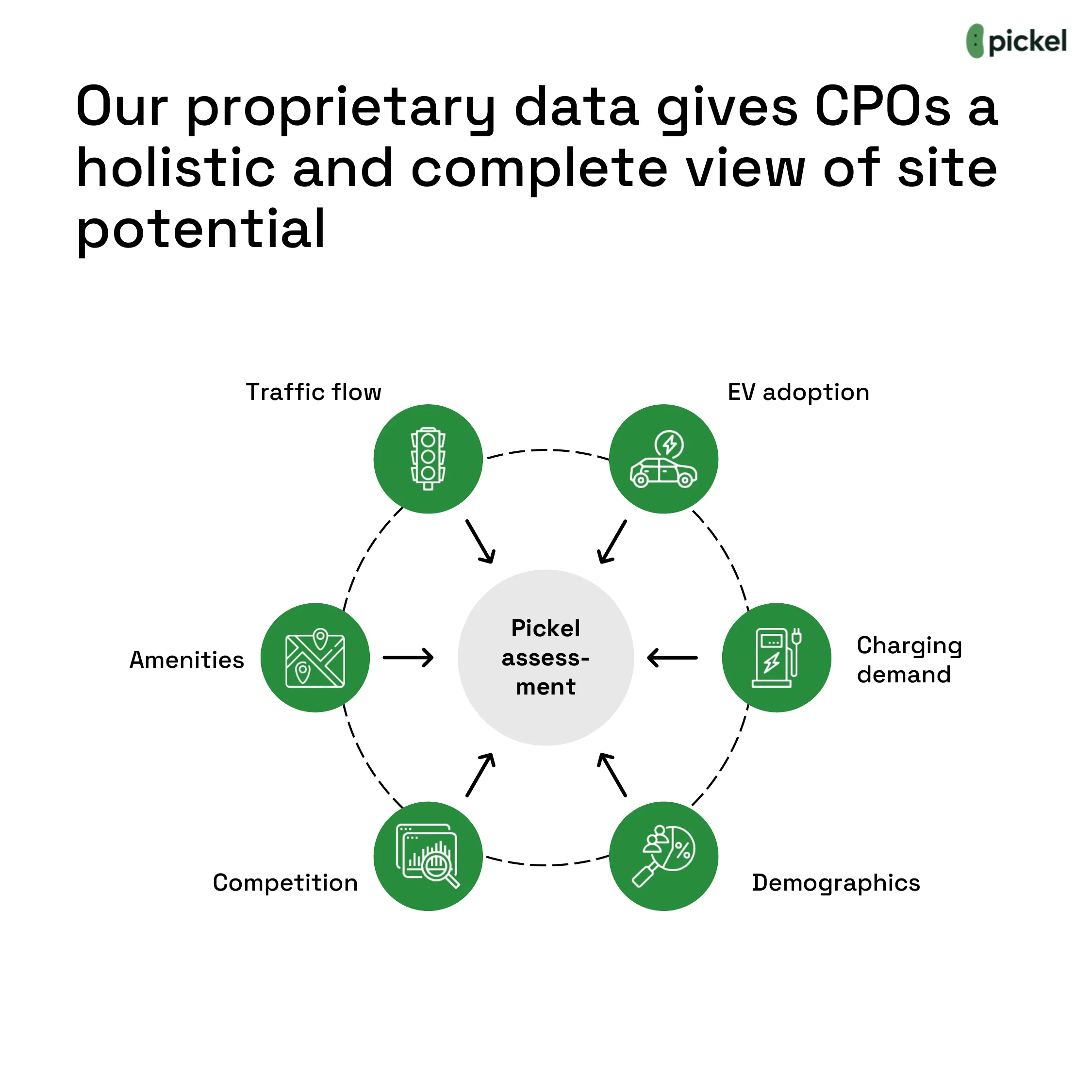
The consequences are significant. Many factors affect site performance, from traffic flow and EV adoption rates to local competition and nearby amenities. Estimating true charging demand with any precision requires synthesizing data from multiple sources, something that manual processes struggle to deliver consistently.

A structured, data-driven assessment
At pickel, we use proprietary charging data and advanced demand forecasts to turn site assessments into a structured, data-driven decision, before the charger is even built. Our platform gives CPOs a holistic and complete view of site potential by integrating traffic flow analysis, EV adoption data, demographics, charging demand patterns, competitive landscape, and amenity mapping into a single comprehensive assessment.
Better locations lead to higher utilization and faster payback. The investment in getting site selection right pays for itself many times over.
More insights