By Christoffer Segerdahl, CCO & Co-founder, pickel
One Price Does Not Fit All in EV Charging
Charging behavior can differ significantly even within the same cluster. Yet most operators still rely on static pricing applied uniformly across their entire network.

Charging behavior can differ significantly even within the same geographic cluster. Yet most operators still rely on static pricing, applied uniformly across their entire network. This disconnect between how drivers actually charge and how operators set prices represents one of the largest untapped opportunities in the industry.
Different sites, different demand curves
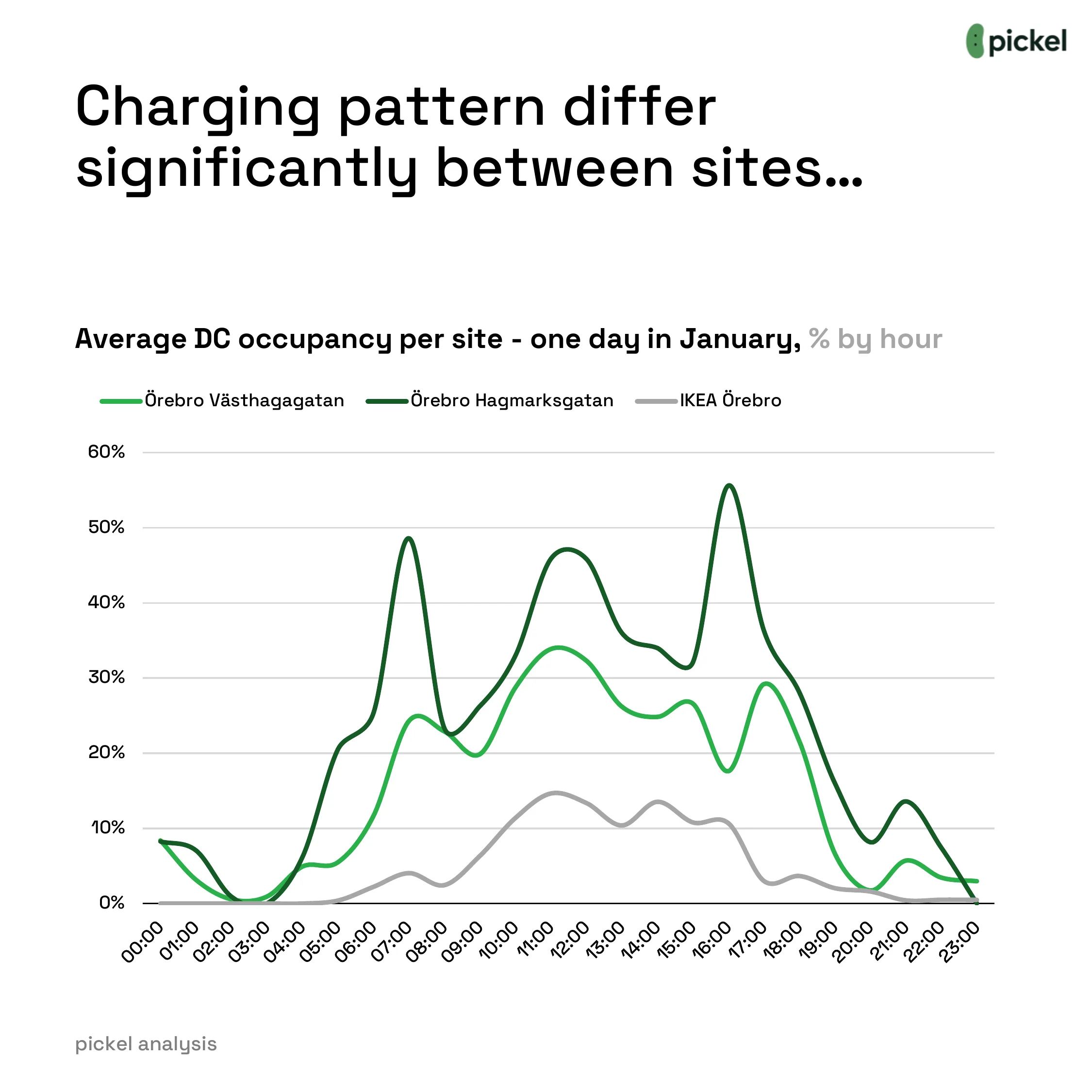
Consider three sites in Orebro. Their occupancy patterns throughout the day are dramatically different: one peaks in the early morning, another at midday, and a third shows steady afternoon demand. Despite these differences, the pricing at all three is typically identical.
Most operators still price statically
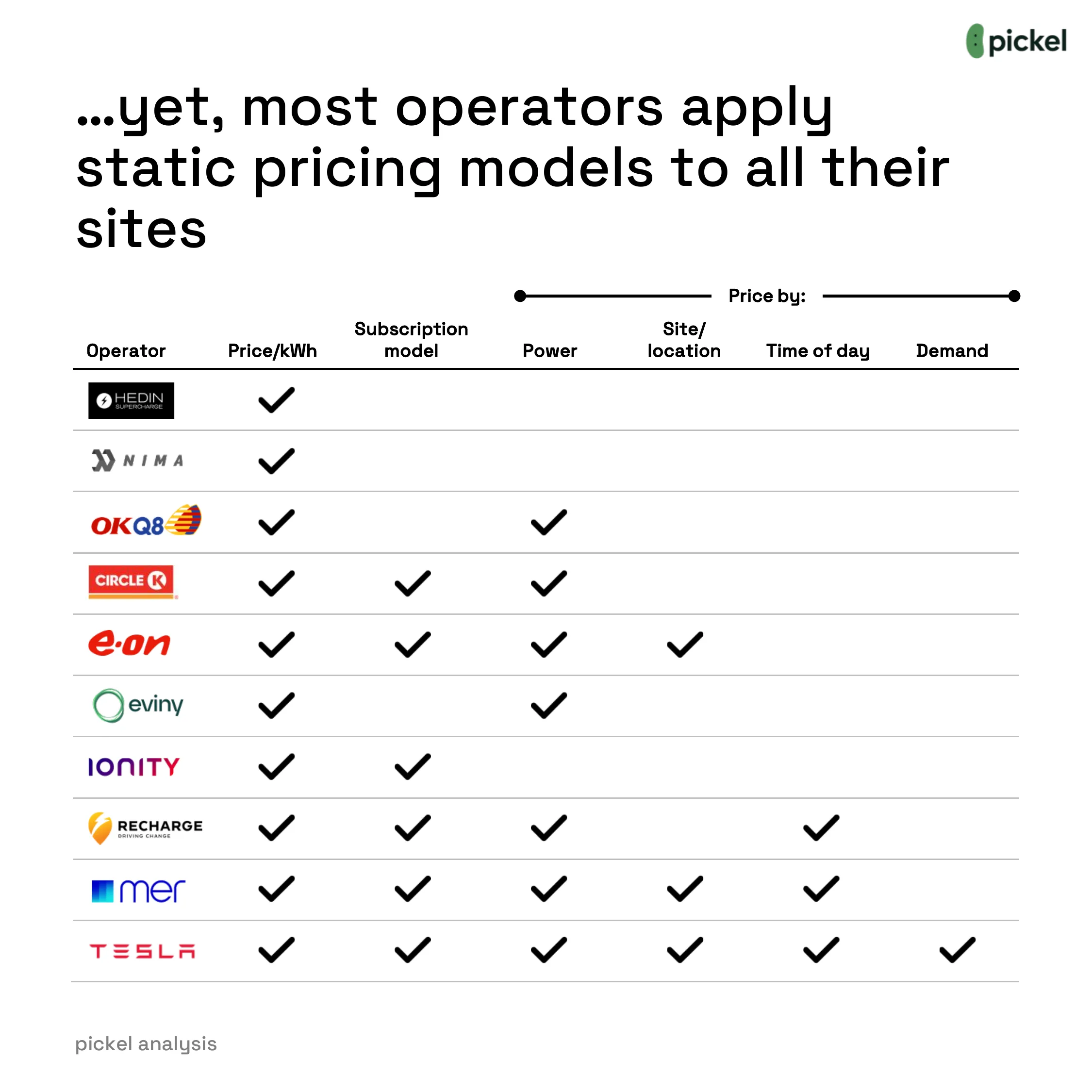
A survey of major operators in the Swedish market reveals a spectrum of pricing sophistication. While some operators have begun incorporating factors like power level, site location, and time of day into their pricing models, very few account for actual demand patterns. Tesla stands as a notable exception, having implemented fully dynamic pricing that responds to real-time conditions.

Intelligent pricing, site by site
At pickel, our AI engine optimizes price and power for each individual site, drawing on real utilization patterns, electricity spot prices, demand sensitivity, market positioning, and competitor data. The result is better utilization, smarter pricing, and infrastructure that adapts to real-world signals rather than averages.
Intelligent pricing is not the future of EV charging. It is already here.
More insights